
Insured shipping means a shipment is protected against defined losses up to a stated value, and it pays only when a claim meets the carrier or policy evidence rules. Without a higher declared value, that stated value can be as low as UPS's $100 ordinary liability limit for U.S. domestic packages. You've probably seen a checkout or listing promise "fully insured" shipping and assumed the full price would come back if anything went wrong. That assumption is exactly where collectors get caught, because the amount written on the shipment, the carrier's liability, and real insurance are three different things.
Table of Contents
- What Insured Shipping Means for Trading Cards
- What Gets Reimbursed in Each Loss Scenario
- Why Graded Cards Need More Than Standard Shipping
- How Lucardio Insured and Trackable Fulfillment Works
- Filing an Insurance Claim Step by Step
- Checklist Before You Buy or Ship
What Insured Shipping Means for Trading Cards
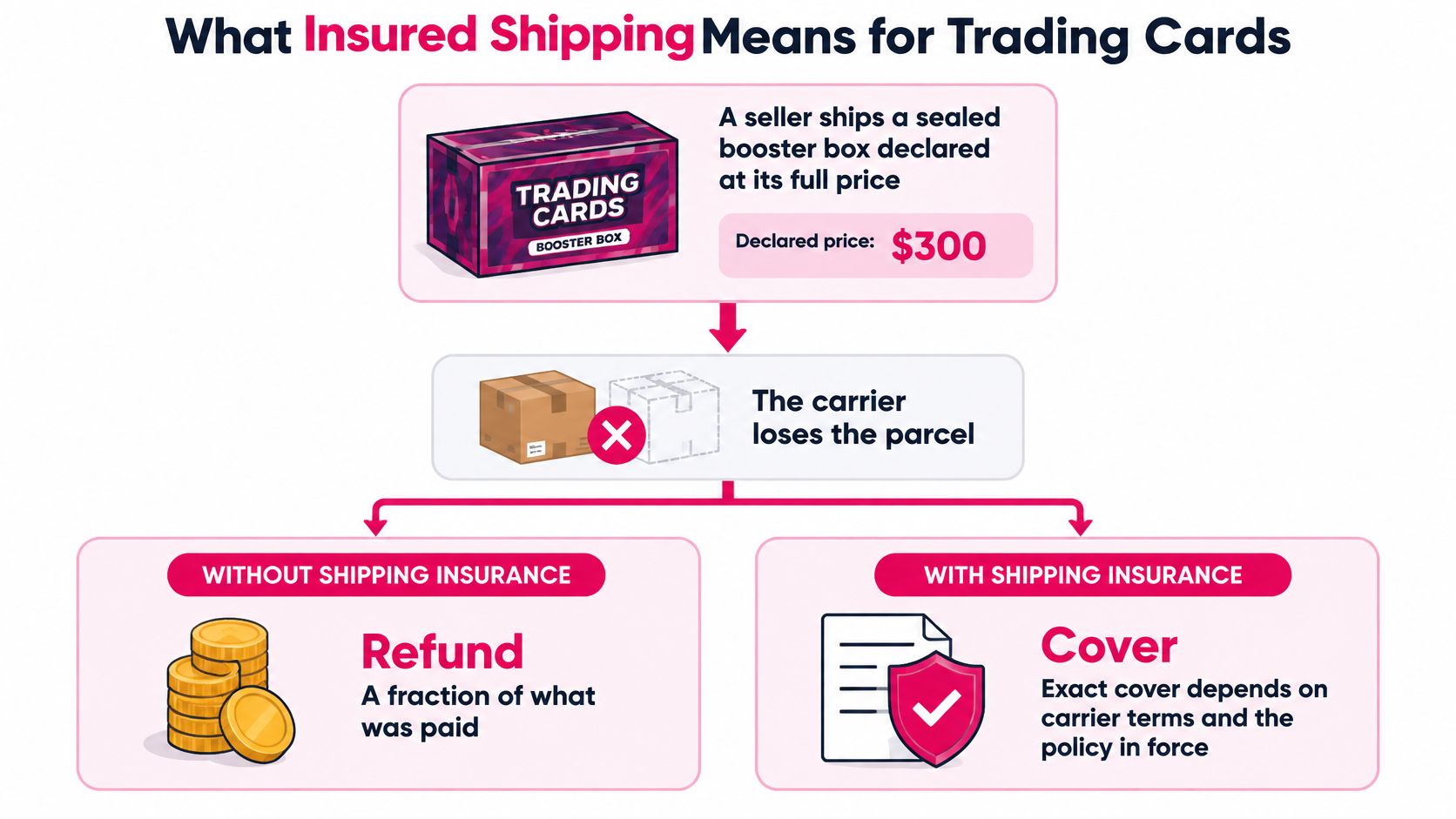
A seller ships a sealed booster box and declares it at its full price. The carrier loses the parcel. The refund that arrives is a fraction of what was paid, and the seller can't understand why, since the full price was right there on the shipment.
The Basic Definition
Insured shipping means a shipment is assigned a value, a premium or charge is paid, and the insurer or carrier assumes defined risks such as loss or physical damage in transit. That's the whole mechanism. Everything else, including exclusions, evidence rules, and deadlines, determines whether it pays.
Think of declared value as the price tag written on the box. It isn't the safety net underneath it. Writing a higher number on the shipment raises the ceiling on what could be paid, but it doesn't guarantee that amount, and it doesn't turn the carrier into an insurer.
FedEx treats declared value as its maximum liability for loss, damage, delay, or misdelivery, and shipments that aren't properly packaged can be excluded from reimbursement. UPS is equally direct. It states that declared value is not insurance, and its ordinary U.S. domestic liability sits at $100 unless you declare more and pay for the increase.
Three Layers of Protection for a Shipped Card
| Layer | What It Is | What It Pays | Main Limit |
|---|---|---|---|
| Carrier default liability | Built into the carrier's standard terms | Standard capped amount per package | UPS U.S. domestic ordinary liability capped at $100 |
| Declared value | Shipper states a higher value and pays an added charge | Raises the carrier's maximum liability | Payment still needs proof of loss, value and compliant packaging. UPS and FedEx say it is not insurance |
| Dedicated shipping insurance | Policy or insurance purchased for the shipment | Covered loss up to the insured amount | USPS coverage up to $5,000, limited to the actual value of the contents |
The layers behave differently because they answer to different rules. Default liability comes free with the shipment and stops at a low cap. Declared value lifts that cap, but the carrier still decides the claim under its own terms, and a poorly packed parcel can fail. Dedicated insurance is a separate policy with its own evidence requirements and deadlines, and it pays only up to the actual value of what's inside.
A higher declared value raises the ceiling on a payout. It doesn't promise you'll reach it.
That's why the figure on the order matters before anything ships. Lucardio calculates cover from the transaction value of each card or sealed product and records that value on the order, so you can see the declared figure before dispatch rather than discovering it during a dispute.
What Gets Reimbursed in Each Loss Scenario
"Fully insured" doesn't mean every bad outcome gets paid. A declared value sets a ceiling, not a guarantee, and payment can depend on proving the loss, showing adequate packaging, supplying proof of value, and filing on time. One insurance FAQ notes that declared value payouts may be based on depreciated value or repair cost and are "not insurance", which surprises people who expected the purchase price back.
Typical Reimbursement by Loss Scenario
| Scenario | Typically Reimbursed | Payout Basis | Proof Needed |
|---|---|---|---|
| Lost in transit, never delivered | Usually yes, after the trace period | Declared or insured value up to the limit | Proof of value, tracking history, packaging record |
| Marked delivered, then stolen | Often no | Depends on delivery scan and signature | Delivery location photo, carrier scan record |
| Crushed outer box, card intact | Depends on packaging compliance | Documented damage, repair or depreciated value | Photos of box and contents, retained packaging |
| Hidden slab damage, outer box normal | Possibly, if packaging met spec and damage occurred in transit | Pre-shipment condition evidence | Pre-ship photos, packing images, grading details |
| Cosmetic damage only | Often limited | Repair cost or depreciated value | Appraisal or repair quote |
| Parcel resealed or tampered | Depends on tamper evidence | Carrier investigation outcome | Timestamped unboxing recording |
| Card value rose after purchase | No, generally | Declared value fixed at shipment | Not applicable. Claim pays declared or insured value |
Results vary by carrier and policy, so read the matrix as a map of where claims usually succeed or stall.
Where Claims Succeed and Where They Stall
A card that's lost in transit is the clearest case. Once the trace period ends and the parcel can't be found, reimbursement up to the declared or insured value is typical, provided you can prove what the card was worth. If you're unsure how that value is established, it's worth understanding how a trading card's worth is determined before a claim ever starts.
A parcel marked delivered and then stolen from a porch is much harder. The delivery scan usually closes the carrier's responsibility, so the loss often isn't paid unless a signature or delivery photo contradicts the record. A crushed outer box with an intact card turns on packaging. If the packing met the carrier's conditions, documented damage may be covered. If it didn't, the carrier can refuse.
Hidden slab damage is the hardest case of all. The outer box looks normal, so the whole claim rests on pre-shipment condition evidence showing the slab left in good shape. Cosmetic damage tends to pay at repair cost or depreciated value rather than full price. A resealed or tampered parcel depends on tamper evidence and the carrier's investigation.
Market appreciation isn't covered. If a card climbs in value after you buy it, the claim still pays the declared or insured value fixed at shipment. Watch this gap closely with auctions, breaks, prize redemptions, and collection liquidations, where the transaction price, declared value, and fair market value often differ.
Contrarian point: Paying for a higher declared value can create confidence without creating equivalent protection. The claim can still fail on exclusions, weak packaging, or missing evidence.
Why Graded Cards Need More Than Standard Shipping
Take a worked example. A $1,200 PSA 10 slab ships with only the carrier's default liability in place. If it's lost, the most you can recover is that low default cap, and the rest of the value is gone. The gap between the card's price and the default limit is the entire argument for matching cover to the transaction price.
This photo shows the kind of transit damage that turns a routine delivery into a claim.
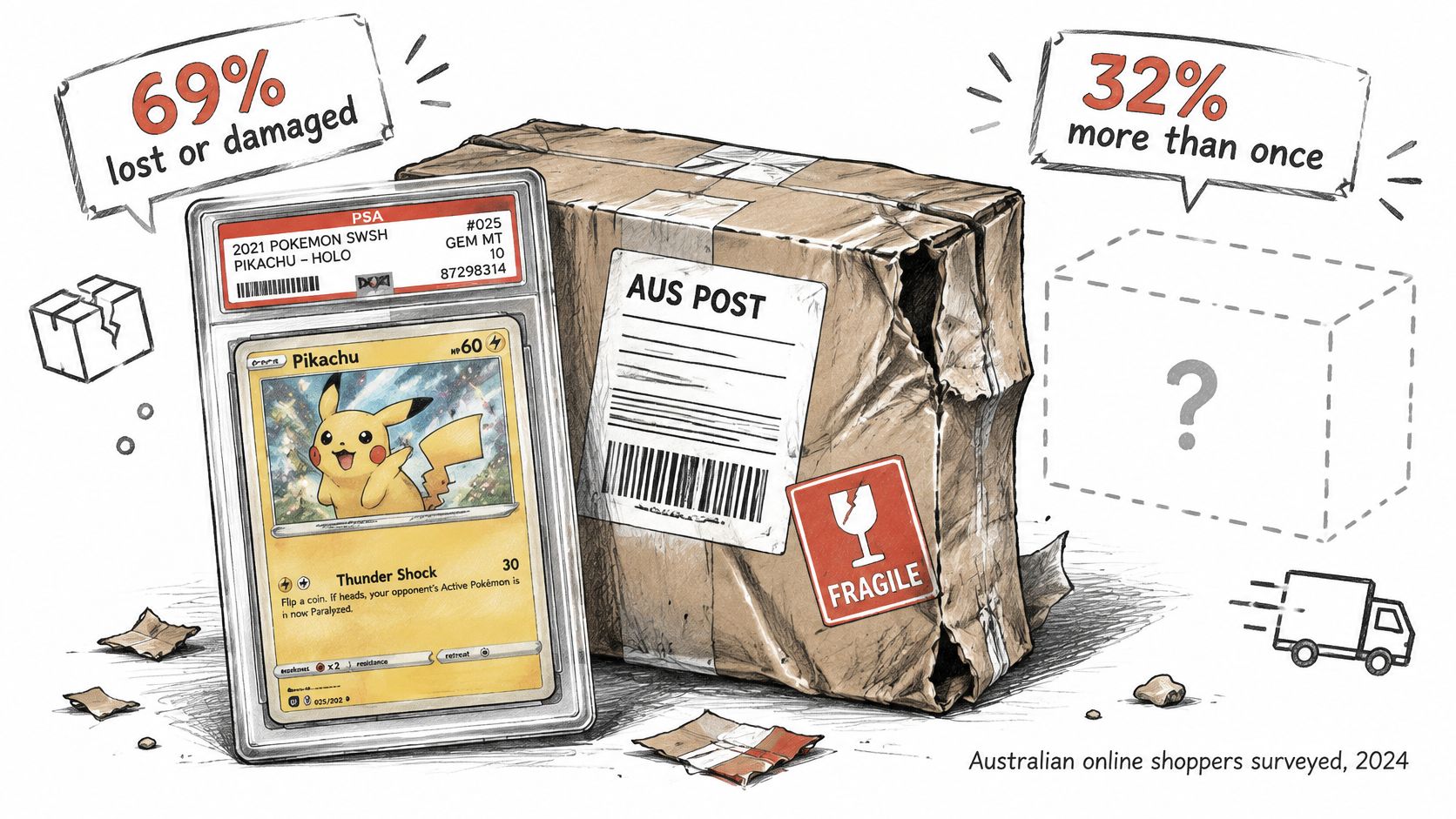
Loss isn't a rare accident, either. In 2024, 69% of surveyed Australian online shoppers had experienced a lost or damaged parcel, and 32% had experienced it multiple times, according to NTI Limited's research on parcel protection. When most shoppers have hit this problem at least once, you should plan for it rather than hope around it.
Why Slabs Raise the Stakes
A graded card is valuable, rigid, and easy to crack or misplace. Its price rests on authenticity and condition together, so a cracked case or a missing parcel doesn't just delay a delivery, it destroys the evidence behind the grade. Putting the card in a rigid card holder protects it physically, but physical protection and financial protection are separate problems. Authentication reduces counterfeit and misgrading risk. It does nothing about a parcel that never arrives.
Three groups feel this most:
- Hobby investors shipping high-value slabs, where one lost parcel can erase the profit on many good trades.
- Sellers liquidating collections, who only get paid cleanly when delivery goes right.
- Live-stream buyers, who receive breaks, auction wins, or prize draw redemptions bundled into a single shipment.
This short video walks through the handling risks graded cards face in transit.
So ask yourself one question before any slab ships. At what value does standard shipping stop being enough?
How Lucardio Insured and Trackable Fulfillment Works
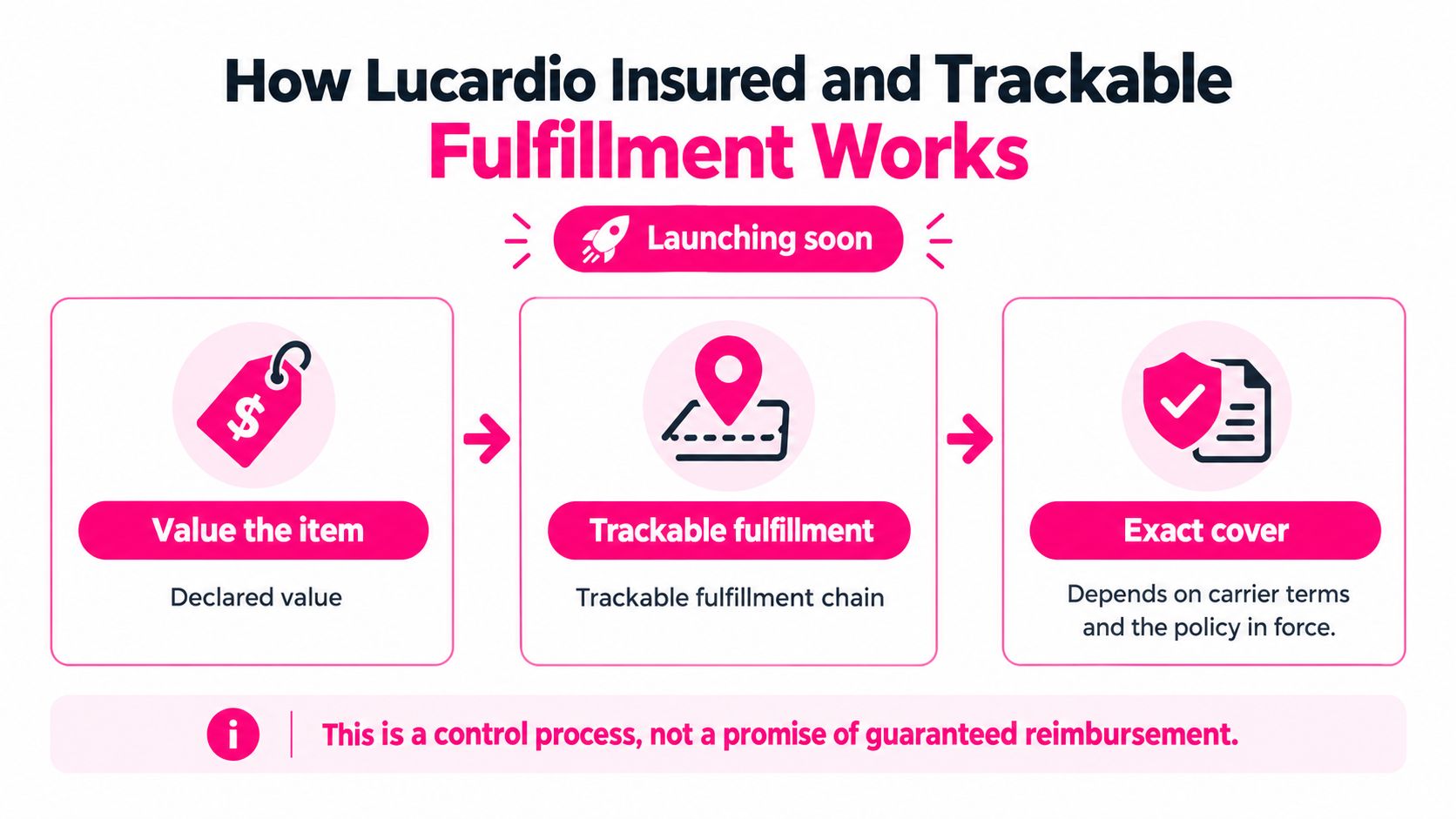
The platform is launching soon, and exact cover depends on carrier terms and the policy in force. What follows is the fulfillment chain as a sequence of controls. Each control exists because it protects a future claim, not just the parcel.
The Seven Controls
- Value the item at its transaction price. The declared value is recorded on the order at checkout, which ties the shipment to a verifiable price from the start.
- Sleeve and secure the card. The card goes into a penny sleeve, then a rigid holder, and the holder is immobilized between protective layers so it can't shift inside the box.
- Pack in a crush-resistant outer box. The box is sized to prevent internal movement and block moisture, which matters because carriers can reject claims over inadequate packaging.
- Photograph the sealed parcel. The photos, package weight, and declared value are linked to the order record, creating evidence of condition at dispatch.
- Dispatch with tracking tied to the order. The carrier acceptance data is retained, which proves when custody passed to the carrier.
- Track to delivery with status alerts. You can follow the parcel and spot a stalled shipment early, while a trace is still useful.
- Route problems to support with saved evidence. If something goes wrong, the photos, weight, value, and acceptance record are already attached to the order.
Why These Controls Protect the Claim
Carriers don't pay on trust. They pay on documentation. USPS requires proof of insurance and proof of value, such as a paid invoice or sales receipt, and its guidance says to retain the mailing container, damaged contents, and all packaging until the claim resolves, with coverage limited to the actual value of the contents up to $5,000, as set out in USPS domestic claims guidance.
Packaging and evidence retention aren't customer service extras. They're technical risk controls that decide whether a claim survives.
The layered packing shows the card's condition at dispatch. The linked photos and acceptance data prove custody. The declared value ties everything back to a price the carrier can verify. What you must keep, and how fast you must file, is covered in the claims steps below.
Filing an Insurance Claim Step by Step
One rule decides most claims before they even start. Your evidence is fixed at the moment of opening, and deadlines are short. If you open a damaged parcel casually, throw the box away, and report the problem a week later, you've likely lost a claim that was valid on the day it arrived.
The Unboxing Protocol
- Photograph before you open anything. Capture all sides of the parcel and every label, including the tracking barcode. This documents crush damage, resealing, or water exposure before you disturb it.
- Open it on a continuous recording. A single unbroken video shows the parcel's condition, the opening sequence, and the contents, so no one can question whether damage happened after delivery.
- Keep everything. Retain the box, every insert and wrapper, and the damaged card itself. Carriers can require the original packaging as part of the claim.
- Note the delivery status. Save the tracking history and flag any gap in scans or unusual delivery time. That record supports loss and tampering claims.
- Notify support immediately. Send the photos and recording right away rather than waiting, because filing windows run from the mailing date, not from when you get around to it.
- Separate the dispute types. A carrier damage claim and an item-not-as-described dispute follow different routes with different evidence. Mixing them slows both down.
- Submit proof of value before the deadline. Include the invoice or appraisal with the claim. Policy terms described in Shipwire's shipping insurance guidance can require photos, an invoice or appraisal, and filing within a defined period.
Claim Deadlines and Waiting Periods by Case
| Case | Deadline or Waiting Period | What to Submit |
|---|---|---|
| USPS domestic damage or loss | File promptly, no later than 60 days from mailing | Proof of value, container, damaged contents, wrapping |
| Example policy, domestic presumed loss | 21-day waiting period | Tracking showing no movement, proof of value |
| Example policy, international presumed loss | 45-day waiting period | Carrier and customs records, proof of value |
| Example policy, claim filing | Within 90 days | Full documentation, photos, invoice or appraisal |
| Lucardio item-not-as-described dispute | Confirmed by support on the order before a dispute starts | Order record, photos of the item received, unboxing evidence |
Confirm the terms that apply to each shipment, since windows differ by carrier and policy.
International claims need extra patience and extra care. Presumed-loss periods run longer, carrier procedures differ, and customs records may form part of the evidence. That's why insured shipping can't be sold as automatic replacement. It's a process with waiting periods built in.
A missed window can end a valid claim outright. The damage can be real, the packaging compliant, the value proven, and the claim still dies because it arrived after the deadline. Treat the clock as part of the evidence.
If the parcel looks wrong, slow down. Photograph first, record the opening, keep every scrap of packaging, and report it the same day.
Checklist Before You Buy or Ship
Most coverage mistakes happen before the parcel moves. You can't raise a declared value after a loss, and you can't recreate packing evidence after the box is gone. Use this checklist while you can still change the outcome.
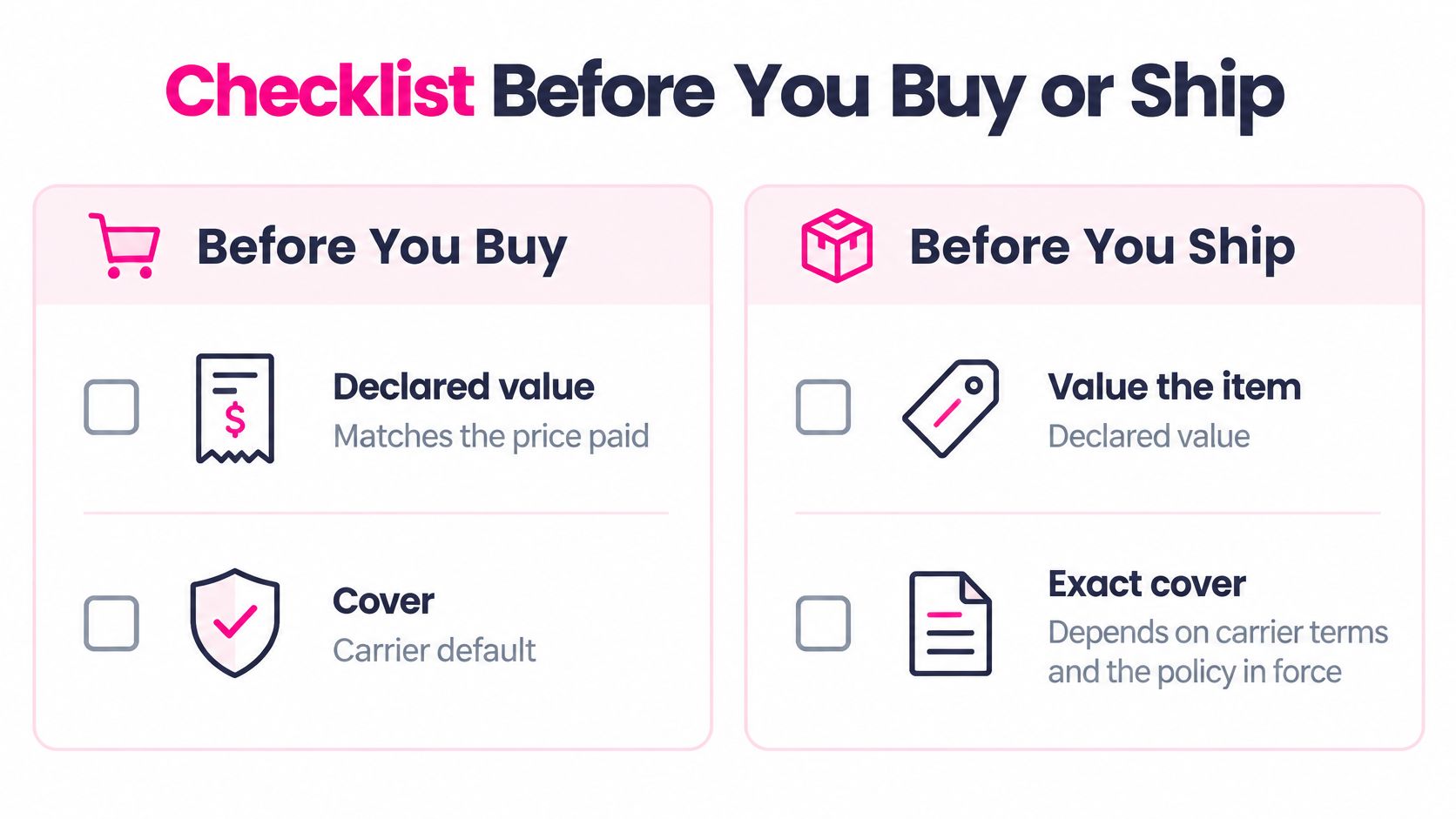
Before You Buy
- Match the declared value to the price paid. Confirm the order shows a declared value that reflects what you paid, not a lower estimate.
- Identify the layer of cover. Check whether you're relying on carrier default liability, declared value, or dedicated insurance. They're not interchangeable.
- Read the damage reporting deadline now. Know the window before delivery, so a problem on arrival doesn't become a research project.
- Judge the slab against the default limit. If the card's value far exceeds standard liability, standard shipping isn't enough on its own.
Before You Ship
- Set a cover threshold. A practical rule is to add cover for any slab worth more than the carrier's default limit, and declare the full transaction value rather than a discounted figure.
- Keep the supporting document. Hold the invoice or valuation that backs the declared amount, since you'll need it to prove value.
- Pack to the claim standard. If you're packing cards yourself, follow a proper method for how to package Pokémon cards for shipping so packaging compliance doesn't become the reason a claim fails.
- Treat international as a separate case. Longer presumed-loss periods and different procedures mean the domestic playbook doesn't automatically apply.
Choose the option by value and risk. Standard shipping suits low-value sealed product where a loss is annoying but absorbable. Declared value fits mid-range items when the carrier's terms are clear and your packaging meets them. Dedicated insurance makes sense for graded slabs and collection liquidations, where a single loss is financially serious.
Your next step before buying is simple. Check that the order record shows the declared value and tracking, save the order confirmation, and review the claims contact so a dispute can start inside the window if something goes wrong.
When Lucardio Collectibles launches, you'll be able to buy authenticated singles, sealed products, and PSA-graded cards with the declared value recorded on your order and tracking tied to each shipment, so the evidence behind a claim exists before the parcel leaves. If you're planning your next graded purchase or preparing to sell a collection, visit Lucardio Collectibles to join for early access and launch updates.